Private Pilot Training in St. Louis at Downtown Airport (2027)
The first time you press the push-to-talk switch and say “Downtown Ground,” your voice may shake a little. A few lessons later, the same call feels routine. With private pilot training in St. Louis at a towered airport, radio work, airspace planning, and traffic awareness become normal parts of flying from the start.
Here at Ideal Aviation, we fly out of St. Louis Downtown Airport in Sauget, Illinois, just across the river from the Arch. If you are comparing private pilot lessons in St. Louis, look at the airport too, because it sets the habits you practice in every lesson. This guide walks through what training here involves, from the tower and the nearby Class B airspace to the landmarks, the weather, our aircraft, and the drive from your side of the river. For the full sequence from first flight to checkride, see our nine-step guide to getting a private pilot license in St. Louis.
Radio work becomes routine when you learn at a towered airport
St. Louis Downtown Airport, identifier KCPS, has an operating control tower. Downtown Tower is open from 6:30 a.m. to 10 p.m. local time, and while it is open, the airspace around the field is Class D. That means you talk to air traffic control before you enter it, and you need a clearance from the tower to use the runways and taxiways.
A typical departure gives you a short script to practice. You listen to the ATIS, the recorded airport weather and information, then call ground control for taxi. At the runway, you call the tower for takeoff. The airport has three runways, including a pair of parallels, so you will hear “left” and “right” in your clearances and learn to confirm which runway is yours before you roll.
Under Part 61, private pilot applicants need three solo takeoffs and three full-stop landings at an airport with an operating control tower. At a towered home field, that requirement fits into the training you are already doing. Your instructor handles the radios at first, then hands them over as you get comfortable. Our Private Pilot program builds that handoff into your lessons.
When the tower closes, the airspace reverts to Class G, and pilots announce their own positions on a shared frequency. That gives you exposure to both towered and self-announced operations from the same field.
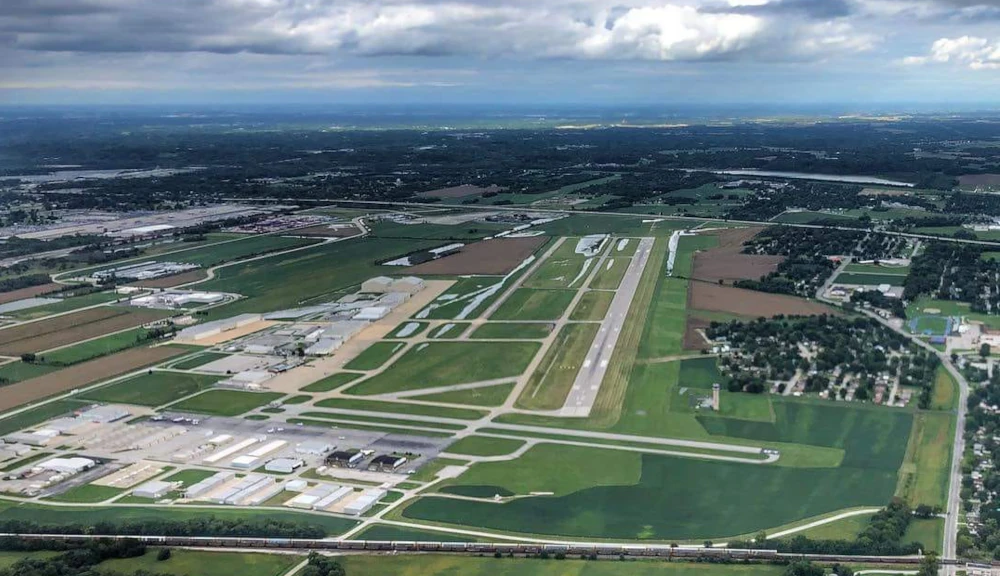
St. Louis Downtown Airport from the air, with its parallel runways and the tower that handles your takeoff and landing clearances.
Planning around Lambert’s Class B builds airspace habits early
St. Louis Lambert International sits about 15 nautical miles northwest of our airport, and the airspace around it is Class B, the most tightly controlled type of airspace around a major airport. Our Class D sits beneath that St. Louis Class B. You need a clearance from air traffic control before you enter Class B, so every flight here starts with knowing where it is and how your route stays clear of it, or how you will request entry.
Over time, that planning turns into habit. You learn to read the sectional chart, pick altitudes on purpose, and keep track of your position relative to airspace boundaries. Those skills go with you to every new airport you fly into. The FAA’s Pilot’s Handbook of Aeronautical Knowledge covers airspace classes and navigation, and your ground study will lean on it.
The FAA’s airport listing also tells pilots to expect student training traffic at the field and to watch for migratory waterfowl on and near the airport. Scanning for traffic and wildlife becomes part of your normal preflight briefing. Our post on why aviation safety comes first in flight training explains how we build those habits.
The Mississippi River and the Arch become your first landmarks
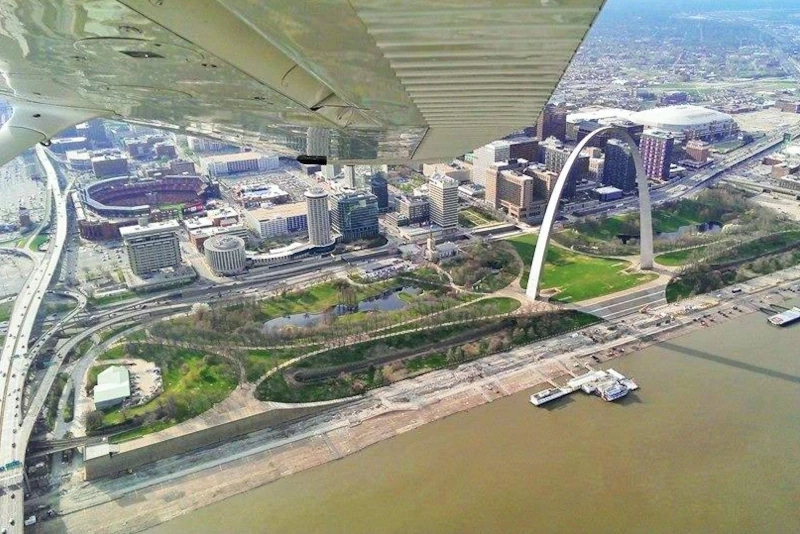
Pilotage means navigating by what you see out the window: rivers, highways, and landmarks you compare against your chart. St. Louis gives you strong ones. The Mississippi River runs right past the area, and the Gateway Arch stands out on the Missouri side. You can see both from above on a discovery flight.
Later in training, you use those views to navigate. You learn to find the airport from the river, check your heading against a highway, and plan a cross-country flight using checkpoints you can recognize from the air. Pilotage works alongside the G3X moving map and radio navigation, so you are never relying on a single source of information.
St. Louis weather teaches you to make go or no-go decisions
Midwestern weather means some months are easier for consistent flying than others. Thunderstorms, low ceilings, and strong wind can cancel a lesson, so build a little room into your week. Our weekly plan for private pilot lessons shows how to hold a backup slot.
A canceled lesson can still teach you something. You learn to read the ATIS and the forecast, talk through the go or no-go decision with your instructor, and understand why a lesson moves. Shorter winter days also make it easier to log night time without a late finish.
Our fleet lets you learn on glass and on steam gauges
Your training can include aircraft with two very different panels. Our Tecnam P92 has the Garmin G3X Touch system with two 10.6-inch touch screens. Our Piper Pilot 100i pairs a G3X Touch with a GFC500 autopilot and synthetic vision, and our Piper Archer adds a G3X Touch display, a GFC500 autopilot with Electronic Stability Protection, and ADS-B In and Out for traffic information.
Our Cessna 172 uses the traditional “six pack” layout of round gauges, a trainer that has served flight schools for decades. Flying both styles helps you get familiar with modern avionics while keeping a solid foundation on the basic instruments. Our guide to reading an instrument panel explains each instrument, and you can see every aircraft on our fixed-wing fleet page.
| Aircraft | Panel style | What it helps you practice |
|---|---|---|
| Tecnam P92 | Garmin G3X Touch, two 10.6-inch screens | Reading a glass display from early lessons |
| Piper Pilot 100i | G3X Touch, GFC500 autopilot, synthetic vision | Cross-country work; later, Instrument Rating training |
| Piper Archer | G3X Touch, GFC500, ADS-B In and Out | Traffic awareness and autopilot management |
| Cessna 172 | Six-pack round gauges | Basic instrument scan on a classic trainer |
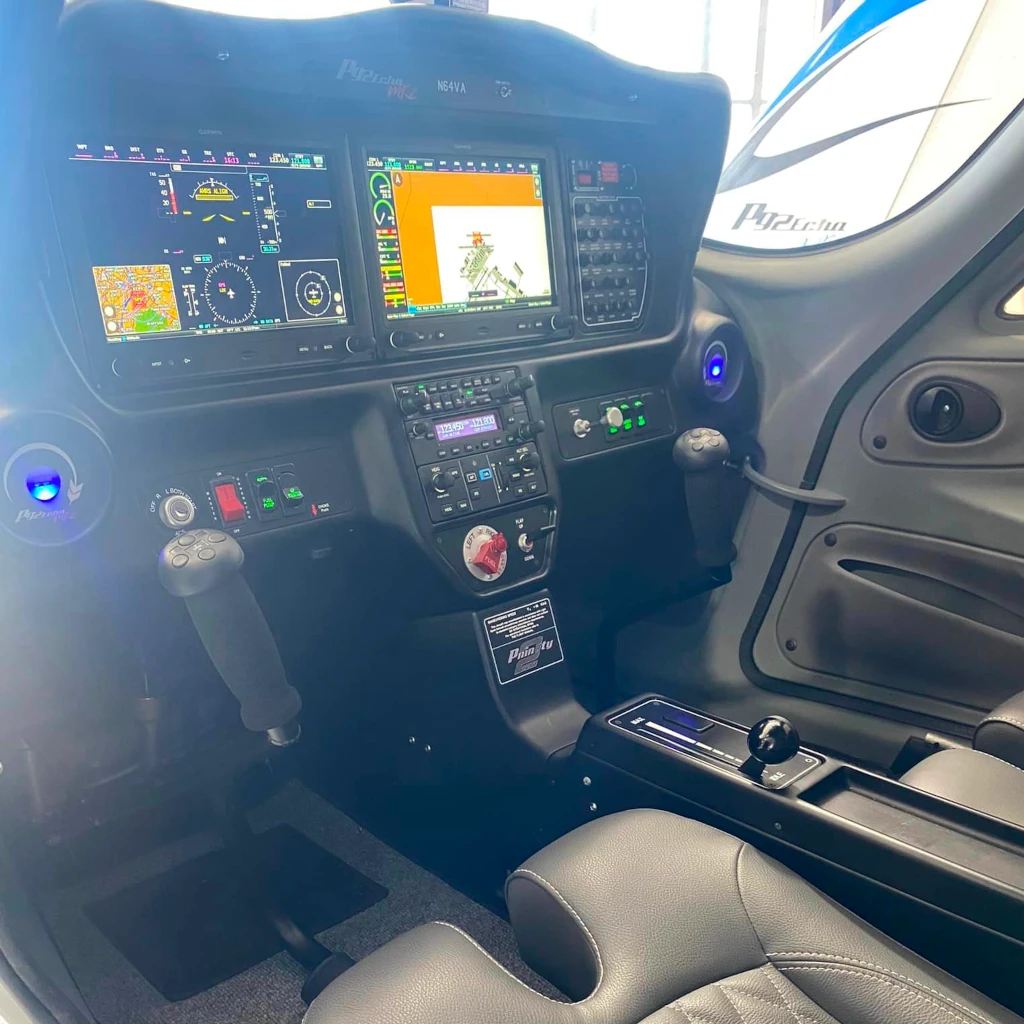
The G3X Touch panel in our Tecnam P92, one of the glass cockpits you can train in.
The Redbird simulator lets you rehearse before you fly
Our Redbird simulator lets you rehearse procedures and emergencies on the ground before you fly them. It has a motion platform, a high-resolution visual system, realistic controls, and scenarios with customizable weather. You can practice a maneuver, an instrument approach, or an engine-failure response until the steps feel calm.
It also gives you something useful to do on a weather day when the airplane stays in the hangar. Learn more on our simulators page, or read why flight simulators matter in training.
Hangars and classrooms give your lessons a home base
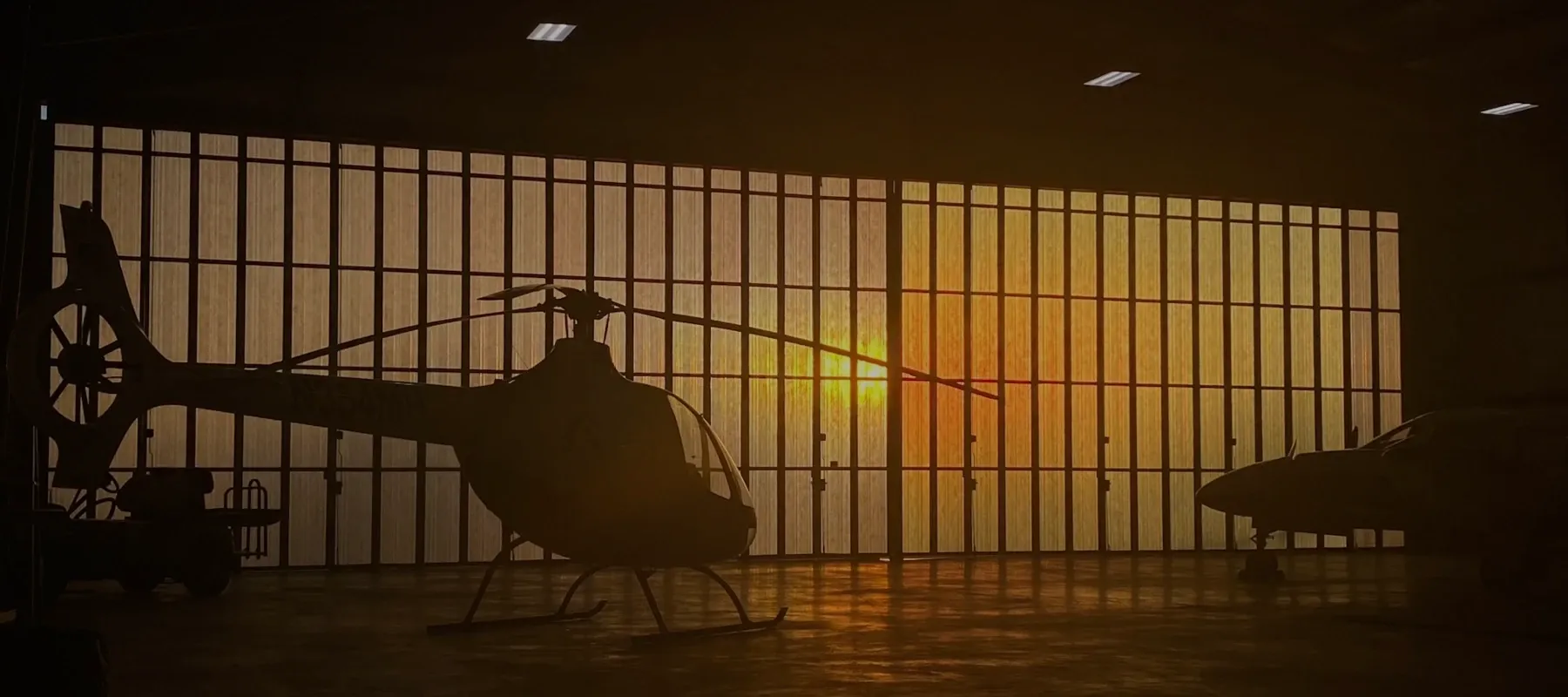
Our facility includes three hangars, private classrooms, and dedicated study areas. Before a flight you brief with your instructor in a quiet room. After it, you debrief what went well and what to work on next, so the next lesson starts where this one ended.
The study areas also give you a place to prepare for the FAA knowledge test between flights. Our tips on passing the FAA written exam cover how to study, and you are welcome to take a tour before you start.
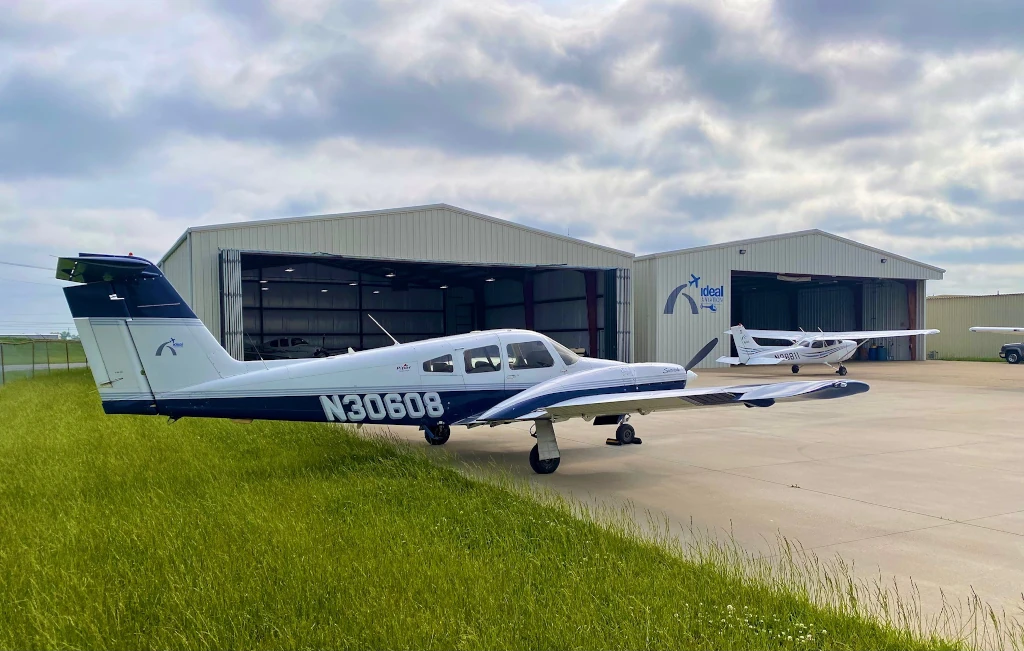
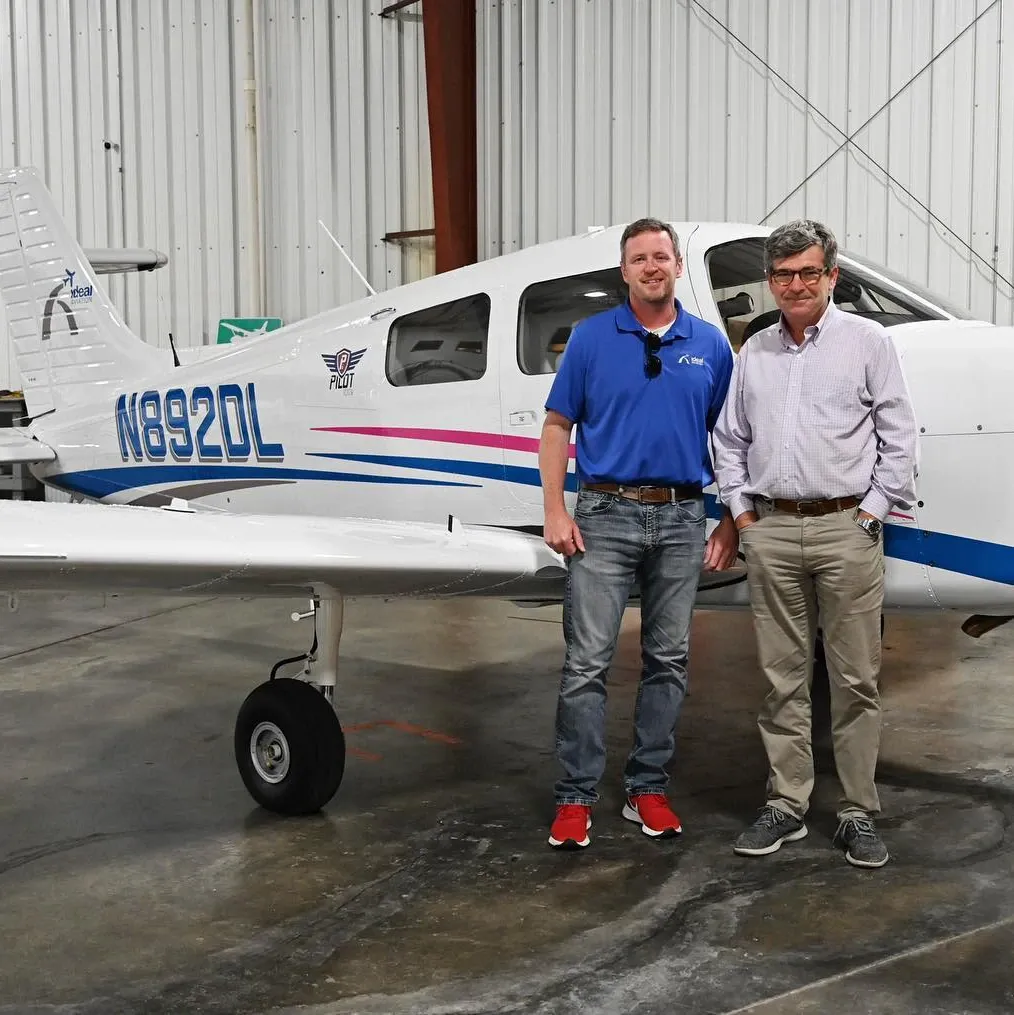
Our hangars at St. Louis Downtown Airport, where lessons start with a preflight on the ramp.
Students drive in from both sides of the river
Because we sit just east of downtown St. Louis, students reach us from Illinois and Missouri. From Cahokia Heights or East St. Louis it is about 5 minutes. From Clayton or Columbia it is about 15 minutes, Belleville about 20, and Kirkwood or Collinsville about 25. Students also come from Edwardsville, Chesterfield, and Webster Groves.
A short drive makes it easier to fly two or three times a week, which keeps your skills from fading between lessons. If you are a college student, our SWIC partnership lets you earn college credit for your flight and ground training at Southwestern Illinois College in Belleville, roughly twenty minutes away.
Frequently Asked Questions
How far is St. Louis Downtown Airport from where I live?
We train at St. Louis Downtown Airport in Sauget, just across the river from the Arch. Students come from both Illinois and Missouri suburbs, and our location pages show drive times from many nearby cities.
Is a towered airport harder for a new student pilot?
It adds radio work, but your instructor handles the radios at first and hands them over gradually. The calls become routine with practice, and under Part 61 you need towered-airport landings for your certificate anyway.
Do I need to fly into Lambert’s Class B airspace during training?
You need an air traffic control clearance before entering Class B, and your instructor will teach you how to plan routes around it or request entry. Airspace is part of what you study for the FAA knowledge test, and our Private Pilot program page outlines the full training path.
Which airplane will I learn in?
Our fleet includes G3X glass-cockpit trainers and a six-pack Cessna 172. We will talk through which aircraft fits your goals when you start. See the full lineup on our fleet page.
How much does private pilot training cost here?
We do not publish rates, because your total depends on how often you fly and how you progress. Our cost breakdown explains each category, and financing may be available to qualified applicants. Call (618) 360-7600 for current numbers.
How do checkrides work at this airport?
When your instructor signs you off, you fly your practical test with a Designated Pilot Examiner. Strong relationships with local examiners help students schedule checkrides quickly. Our local DPEs page introduces them.
See the airport from the cockpit on a discovery flight
The best way to judge a training environment is to fly in it. A discovery flight at St. Louis Downtown Airport puts you in the left seat with one of our instructors, listening to the tower and looking down at the river and the Arch. Request your discovery flight, and our team will call to confirm your date.