How to Get a Private Pilot License in St. Louis: 9 Steps (2027)
You just climbed out of the airplane after your first flight over the Mississippi, and you want to know what to do on Monday. Getting a private pilot license in St. Louis comes down to nine steps taken in the right order: a discovery flight, a training structure, an FAA medical, a student pilot certificate, your first solo, the written test, cross-country and night flying, checkride prep, and the checkride itself.
The order is where students lose time and money. A medical booked too late can stall a student who is ready to solo. A written test taken too early can expire before the checkride. Here at Ideal Aviation, we fly out of St. Louis Downtown Airport in Sauget, and this is the sequence we walk our private pilot students through, step by step, with what the FAA requires at each one.
Step 1: Take a discovery flight to see if flying fits you
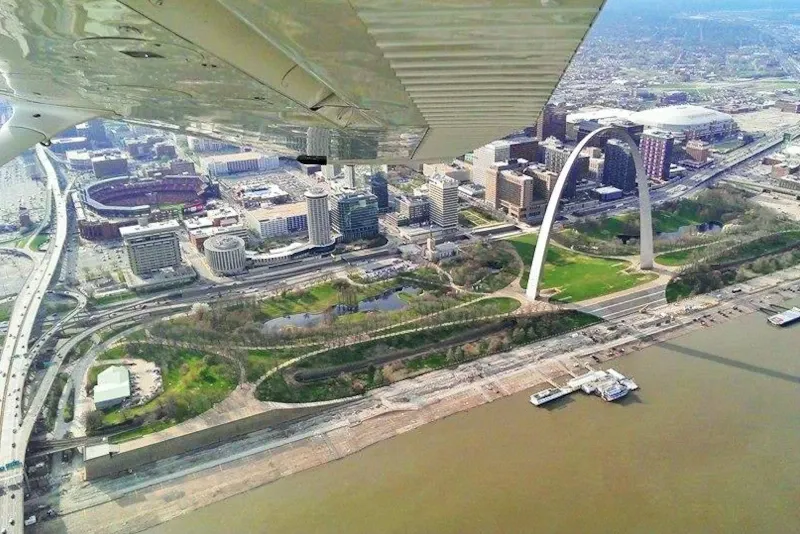
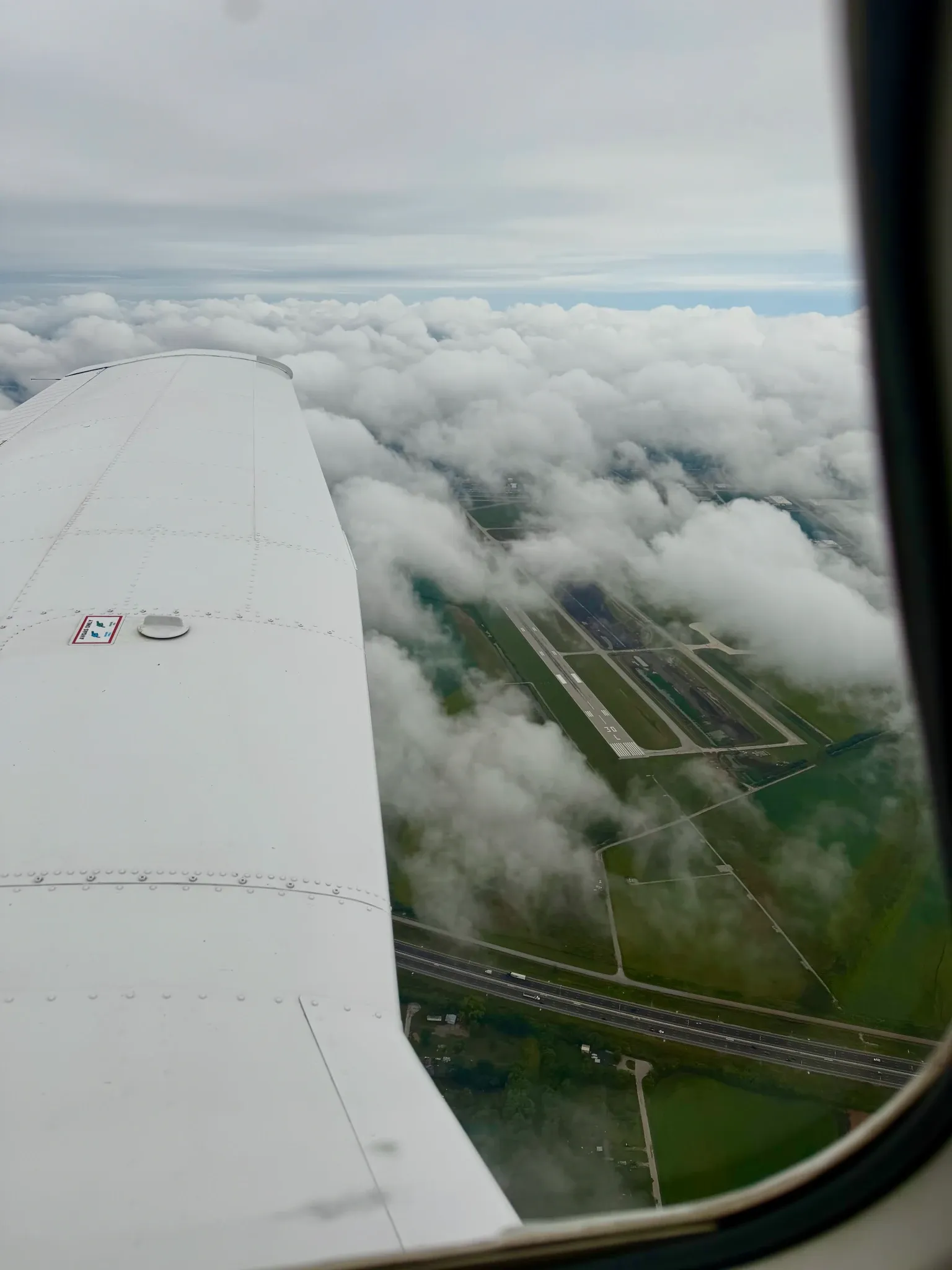
A discovery flight is an introductory lesson with a certified flight instructor. You preflight the airplane together, taxi out, and once you are airborne you may get to take the controls for part of the flight. On a clear day you may see the Gateway Arch and the river from the cockpit.
It is a low-cost way to find out whether you want to keep going. Request your flight online and our team will call to confirm your date, which needs to be at least five days out. If you want to know what happens minute by minute, read our discovery flight guide for first-timers before you go.
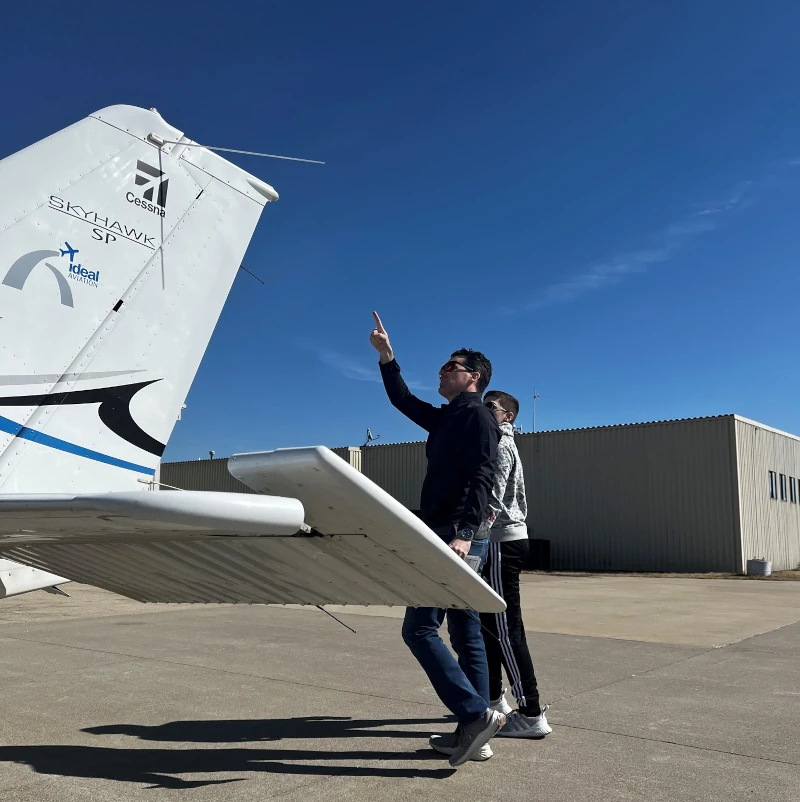
Your first lesson starts on the ramp with a preflight walkaround beside your instructor.
Step 2: Choose Part 61 or Part 141 based on your week
Flight schools train under one of two sets of FAA rules. Part 141 uses an FAA-approved syllabus with scheduled stage checks. Part 61 follows the same certificate standards with more flexibility in how lessons are sequenced and paced. For the private certificate, the FAA minimum is 40 flight hours under Part 61 and 35 hours in an approved Part 141 course.
We offer both, so the choice comes down to your schedule and how you like to learn. Keep this decision short: pick the structure that matches the week you can actually repeat. Our Part 61 vs Part 141 guide covers the tradeoffs in detail, and financing may be available to qualified applicants in either path. Call us at (618) 360-7600 for current rates.
Step 3: Book your FAA medical before you need it
You can start lessons without a medical, but you need one before you fly solo. A third-class medical covers student and private pilot flying. You fill out the FAA’s online MedXPress application, then see an Aviation Medical Examiner, or AME, a doctor the FAA has designated to issue pilot medicals.
Book the exam early, ideally in your first few weeks. If you have a condition or medication you are unsure about, talk to the AME before you invest heavily in training, because only the AME and the FAA can answer eligibility questions. If you are under 40, a third-class medical stays valid for 60 calendar months. Our article on FAA medical classes and timing explains the details.
Step 4: Apply for your student pilot certificate
The student pilot certificate is the other document you need before your first solo. You must be at least 16 to hold one for airplanes, and you must read, speak, write, and understand English. Your instructor helps you apply through IACRA, the FAA’s online application system, and verifies your identity.
Apply as soon as you start regular lessons. The FAA mails the plastic certificate, and you cannot solo without it in hand, so applying early keeps paperwork from setting your pace. You can see how these first steps fit together on our Private Pilot program page.
Step 5: Train to your first solo and earn the endorsement
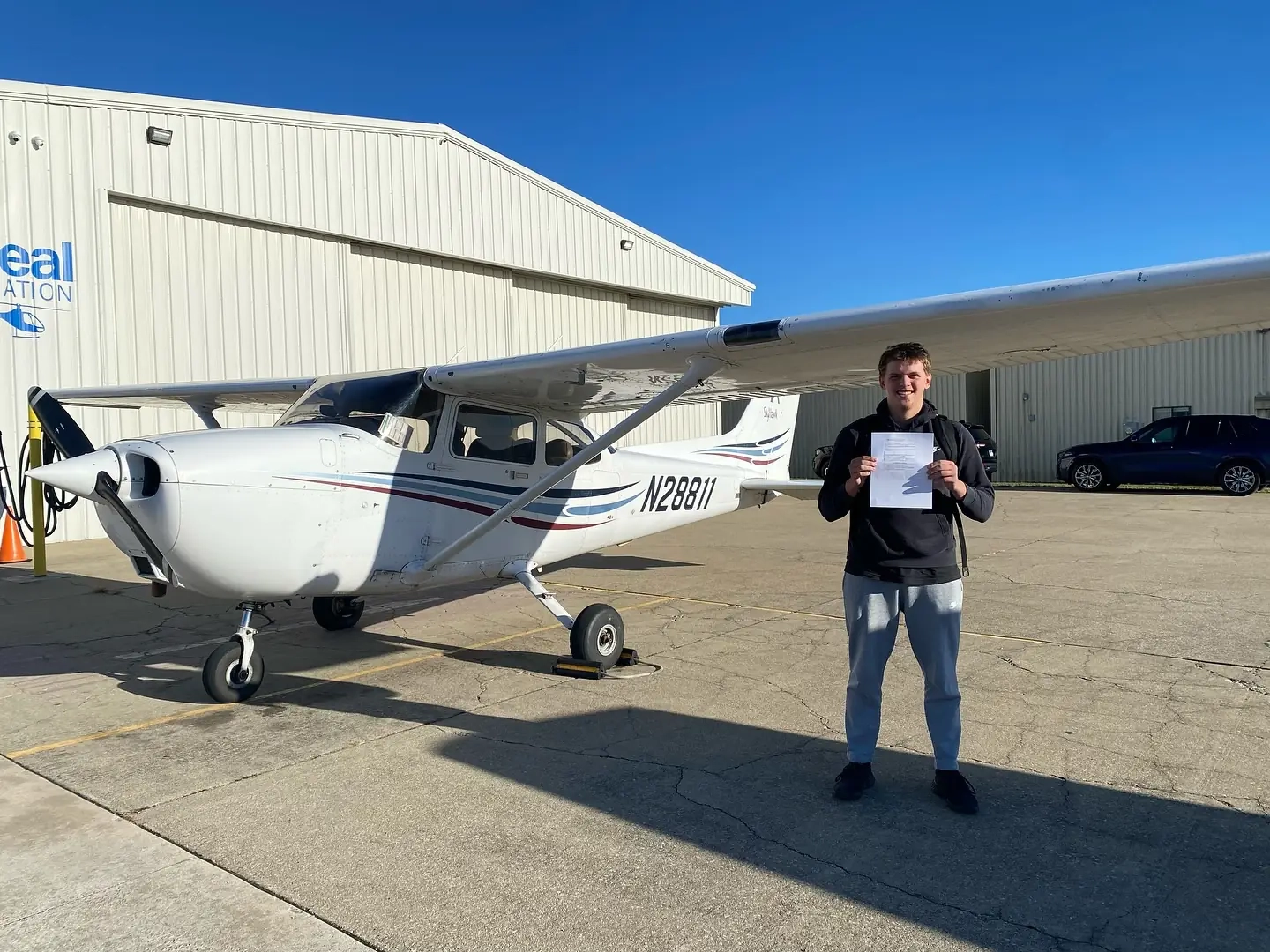
The first stretch of training is pattern work: takeoffs, landings, stalls, slow flight, and emergency procedures until your landings become consistent. Before you solo, the FAA requires a presolo knowledge test that your instructor gives and reviews with you, training in the required maneuvers, and a logbook endorsement for your aircraft make and model dated within the previous 90 days.
One day your instructor steps out on the ramp and you fly three trips around the pattern alone. Your instructor decides when you are ready, not the calendar. Students train on modern glass-cockpit aircraft like our Tecnam P92 and Piper Pilot 100i, and you can see the whole fixed-wing fleet before you choose a trainer.
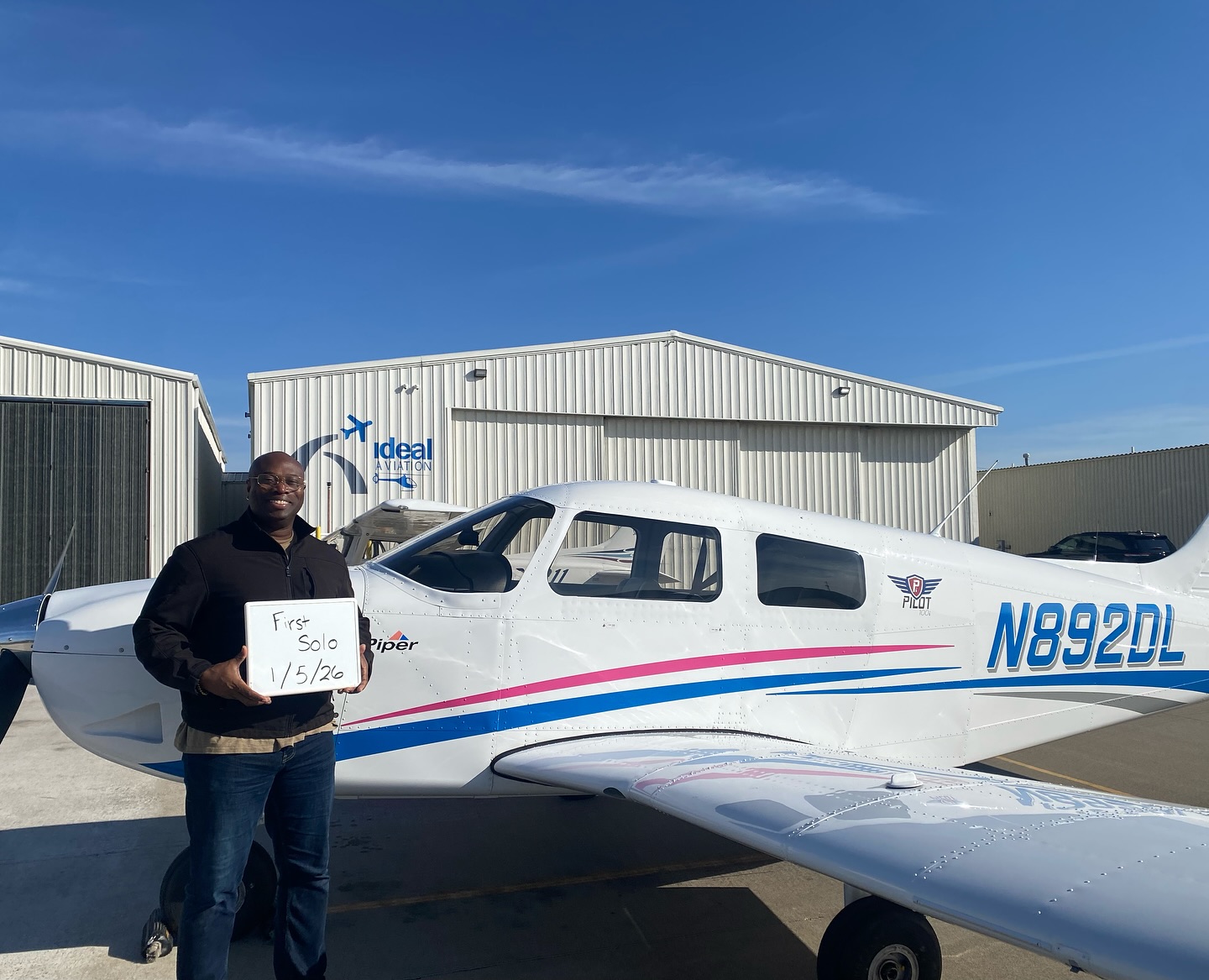
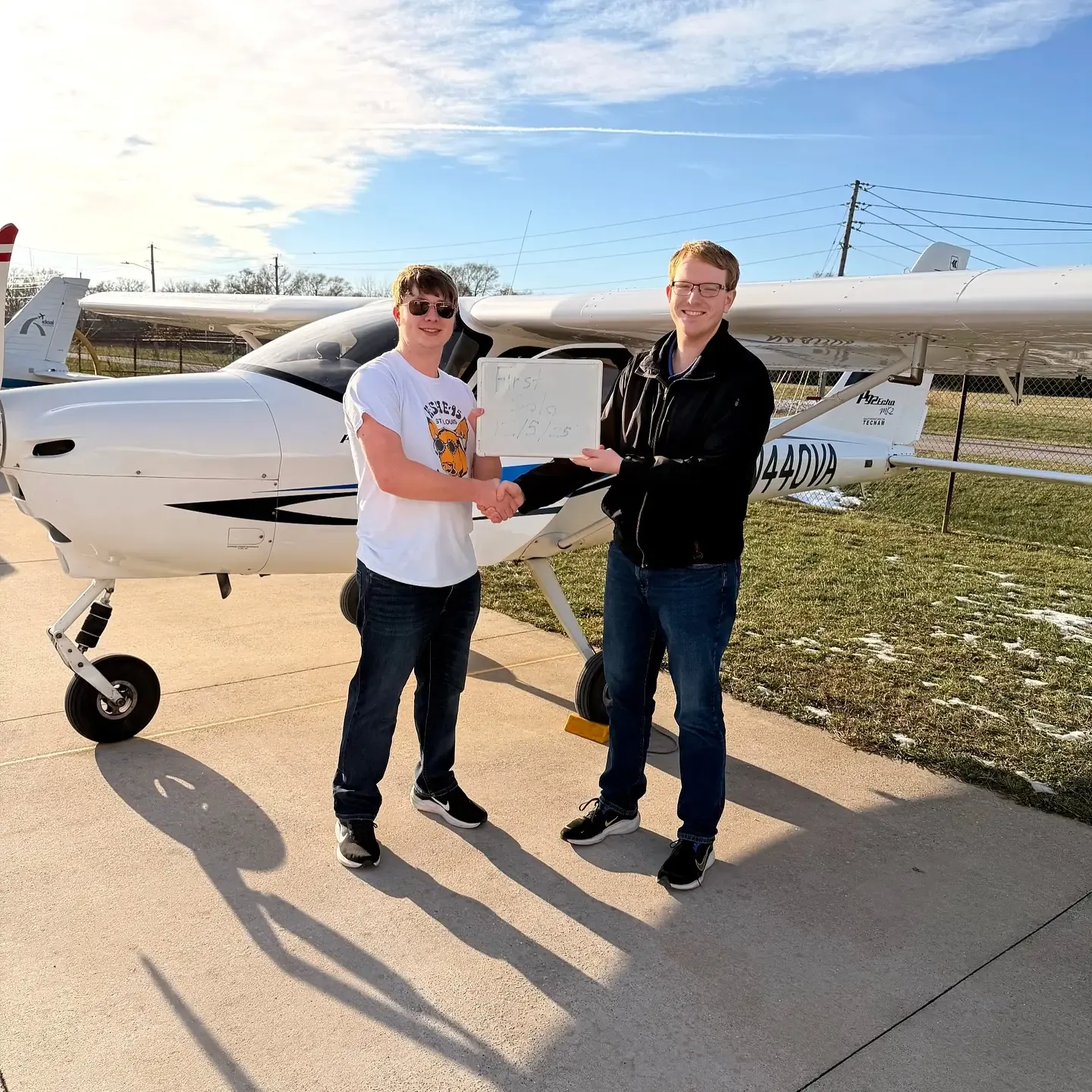
First solo day, after the presolo test, the endorsement, and three trips around the pattern alone.
Step 6: Pass the FAA knowledge test at the right time
The FAA knowledge test, often called the written, is a multiple-choice exam on regulations, weather, navigation, aerodynamics, and aircraft systems. You take it at an approved testing center once your instructor signs you off.
The FAA requires you to pass the test within the 24 calendar months before the month of your checkride. Take it too early and it can expire; leave it too late and it holds up your test. Most students study during ground school and take it around the time they start cross-country work. Our tips for passing the FAA written exam cover how to study.
Step 7: Log the cross-country and night requirements
After solo, training moves away from the home airport. Cross-country flights teach you to plan a route, check weather, talk to air traffic control, and land at unfamiliar airports. Your instructor endorses each solo cross-country after reviewing your planning. Here are the FAA Part 61 minimums for a single-engine airplane:
| Requirement | FAA Part 61 minimum |
|---|---|
| Total flight time | 40 hours |
| Flight training with an instructor | 20 hours |
| Solo flight time | 10 hours |
| Dual cross-country | 3 hours |
| Night training | 3 hours, including one cross-country over 100 nautical miles total and 10 full-stop takeoffs and landings |
| Flight by reference to instruments | 3 hours |
| Solo cross-country | 5 hours |
| Long solo cross-country | 150 nautical miles total, full-stop landings at 3 points, one leg over 50 nautical miles |
| Solo at a towered airport | 3 takeoffs and 3 full-stop landings |
| Checkride preparation with an instructor | 3 hours within the 2 calendar months before the test |
These are FAA minimums, and most students fly more before they are ready, depending on how often they fly, the weather, and how quickly skills settle. A Private Pilot program plan sets the order for these flights so nothing gets missed.
Step 8: Prepare for the checkride and submit your application
In the final stretch you fly the 3 hours of checkride preparation, run practice orals, and rehearse every maneuver to the Airman Certification Standards, the FAA document that sets the tolerances for your test. Our instructors fly a final review with you and check every endorsement before any checkride.
Then the paperwork: your instructor completes your recommendation in IACRA, and you gather your knowledge test report, medical, student pilot certificate, photo ID, and logbook. You also bring an airworthy aircraft with its documents. Strong relationships with local examiners help students schedule checkrides quickly, and our Local DPEs page introduces the examiners who serve St. Louis-area students.
Step 9: Fly the checkride with a Designated Pilot Examiner
A Designated Pilot Examiner, or DPE, is an experienced pilot the FAA has authorized to give practical tests. DPEs are not FAA employees. The checkride starts with an oral portion on the ground, then a flight where you demonstrate maneuvers and procedures to the standards in the FAA Airman Certification Standards.
When you pass, the examiner issues a temporary certificate that day, and your permanent card arrives by mail. If one task does not meet the standard, you train on it, get a new endorsement, and retest. Plan for the examiner’s fee, which you pay directly, along with aircraft time. Our guide to preparing for your checkride with a DPE in St. Louis walks through test day hour by hour.
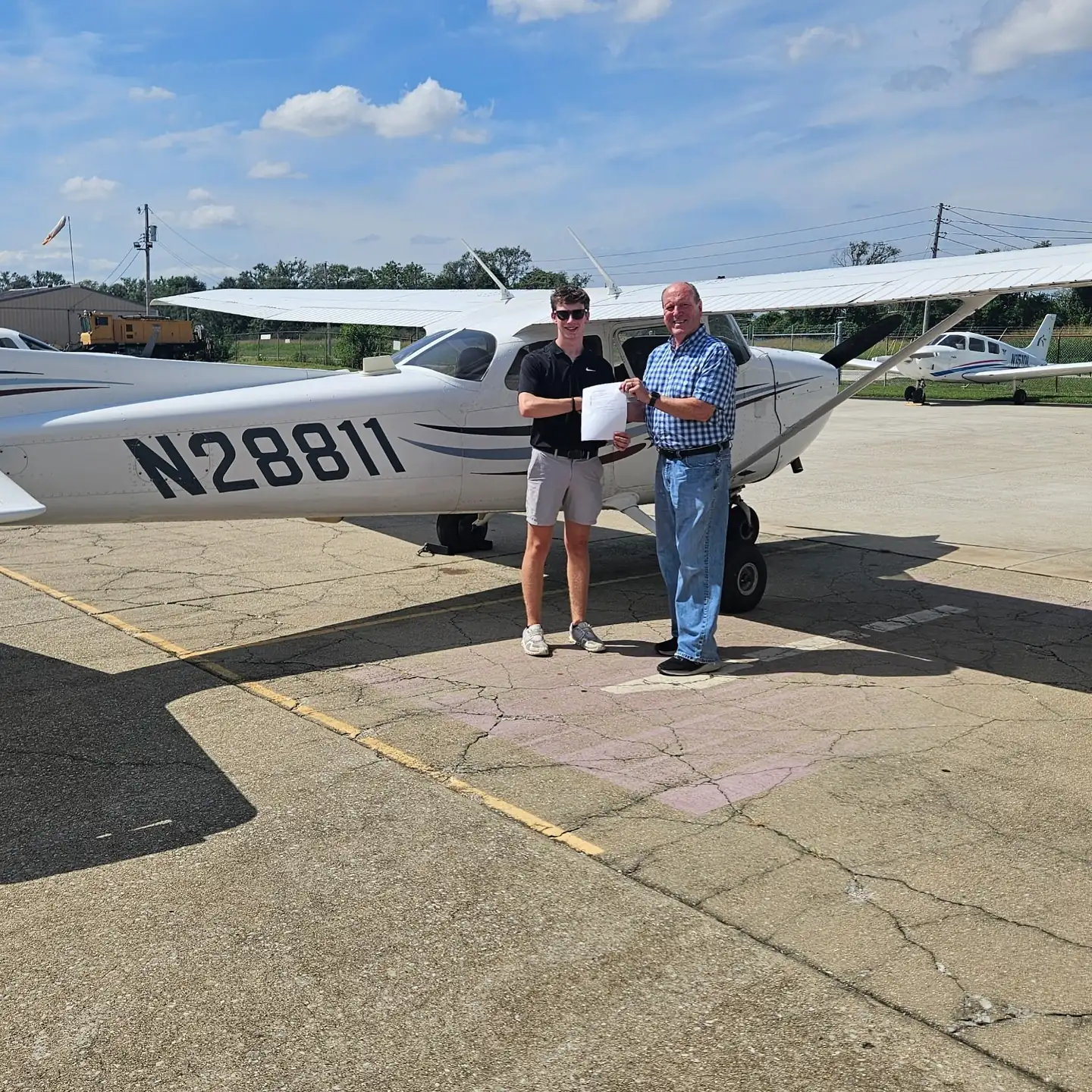
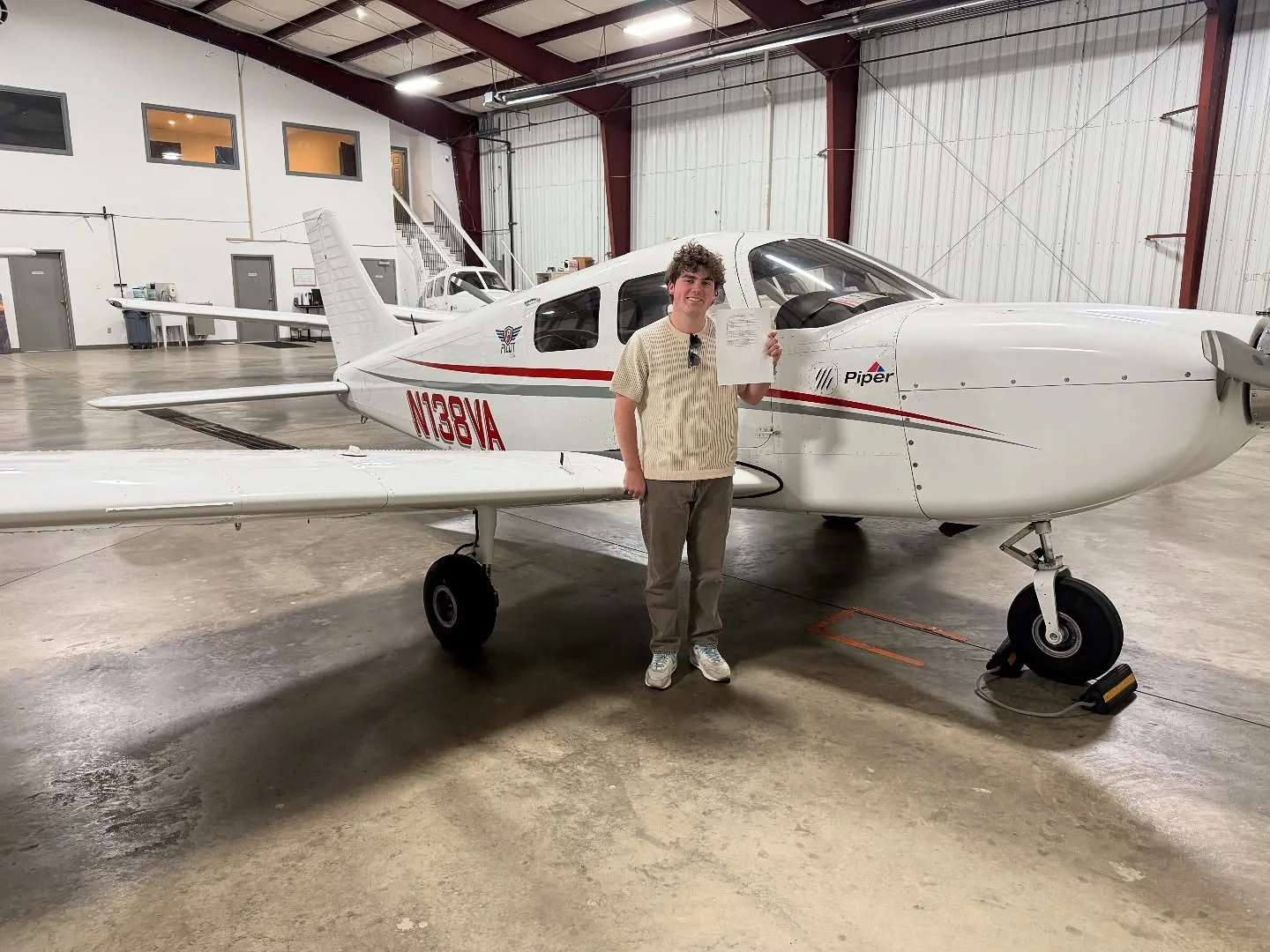
Pass the checkride and the examiner hands you a temporary certificate the same day.
Frequently Asked Questions
How much does a private pilot license cost in St. Louis?
Cost depends on how many hours you fly, how often you fly, and your aircraft. We do not publish rates, so call us at (618) 360-7600 or contact our team for current numbers. Our budgeting guide shows how to plan by milestone.
How old do you have to be?
You can hold a student pilot certificate and solo at 16. You must be 17 to earn the private pilot certificate. Our post on age and starting to fly covers both ends of the range.
Do I need a medical before my first lesson?
No. You need a third-class medical before you solo, but not to start lessons. Booking it early protects your schedule.
What does a private pilot license let me do?
You can fly for fun and carry passengers, but you cannot fly for pay. Many students add an Instrument Rating next.
What comes after the private certificate if I want a career?
The common path continues through instrument, commercial, and instructor certificates. Our guide to becoming a pilot in Illinois lays out the full career ladder.
Can I train if I live in Missouri?
Yes. Students come from both sides of the river, including Belleville and Kirkwood.
Book your discovery flight and start step one
Every private pilot in St. Louis started with one flight and a plan for the next eight steps. Your first step is a discovery flight at St. Louis Downtown Airport, where you meet an instructor, fly the airplane, and leave with a clear picture of what training looks like for your schedule. Request your discovery flight and our team will call to confirm your date.