How Often to Take Private Pilot Lessons: A 2027 Weekly Plan
You finish a lesson where steep turns finally clicked, and then life gets busy for three weeks. When you come back, the first half of your next lesson goes to finding that feeling again. For most people planning private pilot lessons, how often you fly shapes your progress and your budget more than any other choice you control.
Here at Ideal Aviation, we fly out of St. Louis Downtown Airport in Sauget, and we recommend two to three lessons a week when your schedule and budget allow. This guide shows why that rhythm works, what a realistic week looks like if you work full time or go to school, and how ground study, the knowledge test, our simulator, and St. Louis weather fit around it. If you want the full order of steps from first flight to checkride, start with our nine-step guide to getting a private pilot license in St. Louis.
Two to three lessons a week keeps your skills moving forward
Think of each maneuver as three lessons long. One lesson introduces it, the next sharpens it, and the third makes it repeatable. When those lessons sit a few days apart, each one builds on the last. When they sit weeks apart, the next lesson turns into a review of work you had already started to own.
Two to three lessons a week is the pace we suggest for private pilot training. It is frequent enough for landings, radio calls, and checklists to stick, and spread out enough to leave time for study and rest. Our Private Pilot program is built around steady progress, and your instructor will help you settle on the number that fits your week.
One lesson a week still moves you forward, but expect more review at the start of each flight. Pick the pace you can hold for months, because a realistic schedule beats an ambitious schedule you cannot repeat.
Why long gaps between lessons cost you time and money
Every lesson you spend relearning a skill is time and money spent on ground you already covered. Consistency is both a learning decision and a financial decision. Fewer review lessons leave more of each flight for new material, like slow flight, emergency procedures, and eventually your first solo.
The hour requirements show how much room there is for that difference. Under Part 61, the FAA minimum for a private pilot certificate in an airplane is 40 hours of flight time. The FAA also reports a U.S. average of approximately 75 hours for completing the private pilot requirements. Treat that average as national context, not a forecast for you; how often you fly, the weather, and how quickly skills settle all move your number.
A steady schedule is the variable you control most directly. If you want a broader look at what speeds training up or slows it down, our post on how long it takes to become a pilot covers the other factors. Our budgeting guide explains how to fund enough weeks in advance to keep the rhythm going.
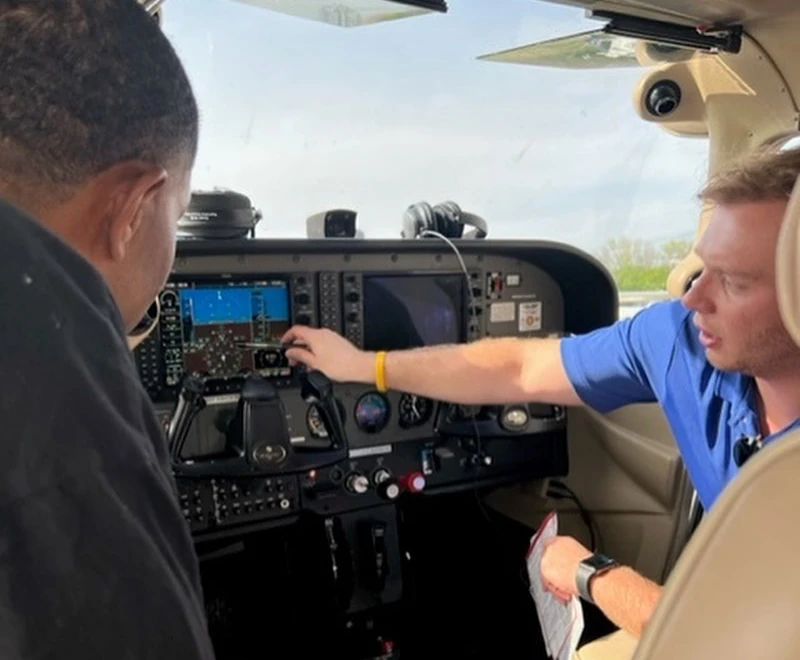
Lessons a few days apart let each briefing pick up where the last flight ended.
A sample week if you work full time
If you work full time, a plan built on two lessons a week and some study time is a good place to start. Here is one way to lay it out. Treat it as a starting point for your first scheduling conversation with us, then adjust it to your job.
- Two weekday lessons on the days your work schedule is most predictable, spaced so there is at least a day between them.
- One weekend slot you hold as a third lesson on good weeks or a weather backup on bad ones.
- Three short study blocks on the evenings you are not flying: a chapter, a few practice questions, or chair-flying the next lesson at your kitchen table.
Chair-flying means sitting down and talking yourself through the next lesson’s checklists, radio calls, and maneuvers before you arrive. Preparation protects the value of your cockpit time, and our guide to making the most of every flight lesson has more ideas. If you are changing careers and planning around a job you have not left yet, our career-changer training plan covers the bigger decisions.
A sample week if you are a student
If your class schedule leaves daytime gaps, three lessons a week can fit. Through our partnership with Southwestern Illinois College, a week can look like this. On a Tuesday morning you are in a classroom at SWIC in Belleville. By early afternoon you have driven roughly twenty minutes to St. Louis Downtown Airport, where your instructor is waiting beside a Piper with a Garmin G3X panel for a lesson on steep turns and ground reference maneuvers.
Later in the week you spend an hour in our Redbird simulator on a day the weather would have canceled the airplane. Once you are endorsed for solo, weekend mornings become solo practice. You can see how the degree path works on our SWIC partnership page.
| Week type | Flight lessons | Study and ground time | Backup plan |
|---|---|---|---|
| Working full time, Private Pilot | Two weekday lessons, plus a weekend slot | Three short evening blocks | Weekend slot covers a weather cancellation |
| College student, Private Pilot | Three lessons, including weekend solo practice once endorsed | Class time plus study between flights | Redbird session on a weather day |
| Tight month, Private Pilot | One to two lessons | Extra study to limit review time | Resume your normal pace as soon as you can |
These are planning examples. Contact us for current scheduling availability, and we will help you turn one of these into a real calendar.
Where ground study and the knowledge test fit in your week
Ground study is what lets each lesson start ahead instead of behind. You learn regulations, weather, navigation, aerodynamics, and aircraft systems through ground school and home study, and you can use our private classrooms and study areas when you are at the airport.
The FAA knowledge test, often called the written, is a multiple-choice exam you take once your instructor signs you off. Time it carefully: you must pass it within the 24 calendar months before the month of your checkride, so taking it far too early risks expiration, and leaving it too late can hold up your test date. Our tips for passing the FAA written exam cover how to study.
Our Redbird simulator lets you rehearse procedures and emergencies on the ground before you fly them, and it turns a weather cancellation into useful practice. You can read more about it on our simulators page.
How St. Louis weather and seasons shape your schedule
Midwestern weather means some months are easier for consistent flying than others. Thunderstorms, low ceilings, and strong wind can cancel a lesson, and so can a maintenance issue. No school can guarantee every lesson goes as planned, so build a buffer into your week instead of booking every slot to the limit.
A few habits keep the rhythm alive when the weather turns:
- Hold one backup slot each week, often on the weekend, so a canceled lesson moves instead of disappearing.
- Keep a simulator option for days when the airplane stays in the hangar.
- Use shorter winter days for night training. Under Part 61 you need 3 hours of night training, including 10 full-stop night takeoffs and landings, and earlier sunsets let you log them without a late finish.
On an overcast winter flight over the Metro East, you learn to read the sky as part of the lesson. That decision-making is part of training, and our post on why aviation safety comes first in flight training explains how we approach it.
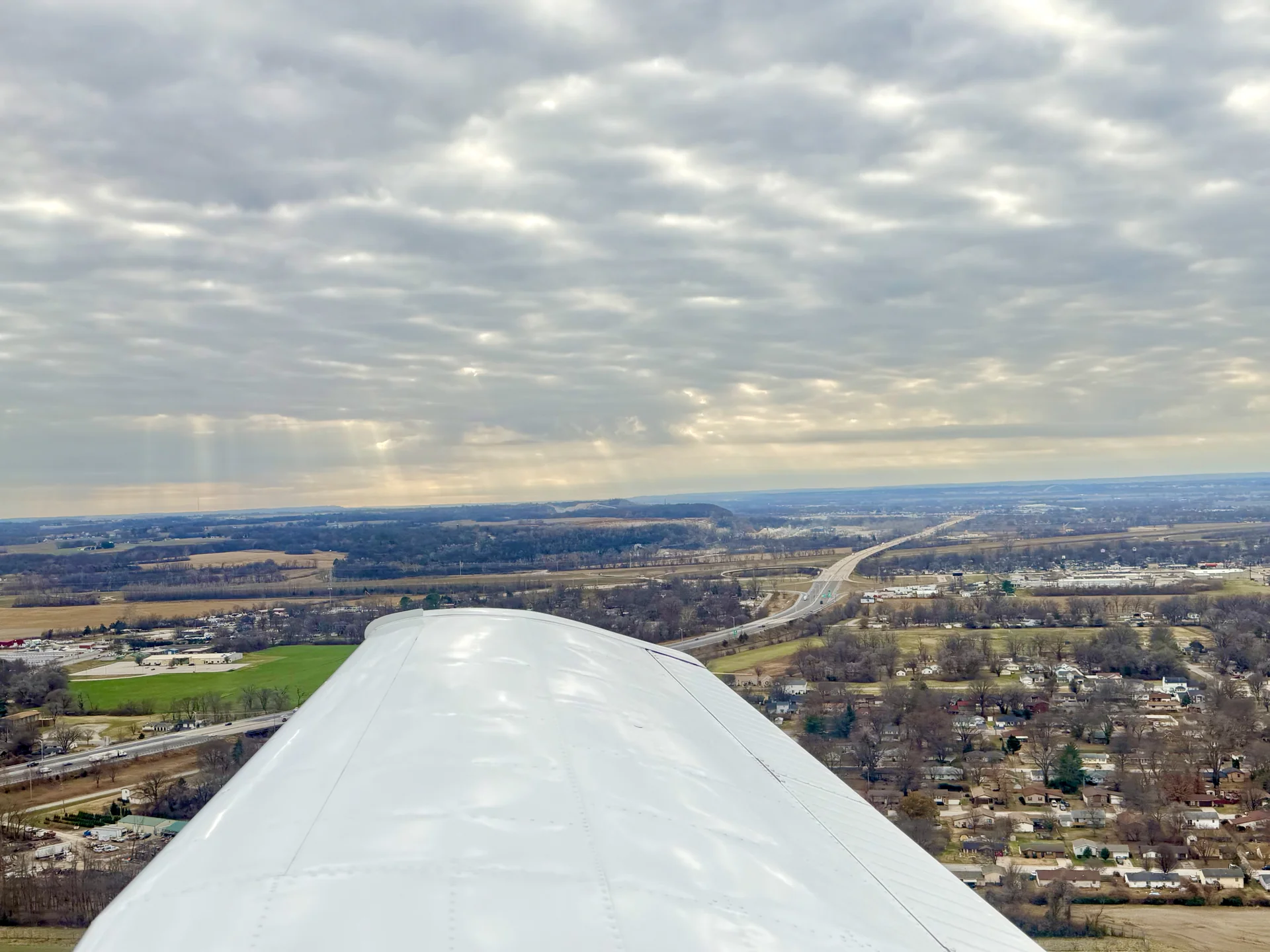
Winter flying over the Metro East, with earlier sunsets that make night training easier to schedule.
Adjust your pace as you move from first lesson to checkride
Your weekly plan changes shape as training moves along. In the early weeks, put two paperwork items on your calendar alongside your lessons: your FAA medical and your student pilot certificate. You can take lessons without either one, but you need both before you fly solo. Our article on FAA medical classes and timing explains when to book the exam.
After solo, some of your weekly slots become solo practice and cross-country flights, which take more planning time on the ground. Near the end, consistency matters again. Under Part 61, you need 3 hours of checkride preparation with an instructor within the 2 calendar months before your test, so keep that final stretch steady. Strong relationships with local examiners help students schedule checkrides quickly, and our local DPEs page introduces them.
If you are still choosing a training structure, Part 141 follows an FAA-approved syllabus with stage checks, and Part 61 gives you more flexibility in pacing. We offer both, and our Part 61 vs Part 141 guide helps you match the structure to your week.
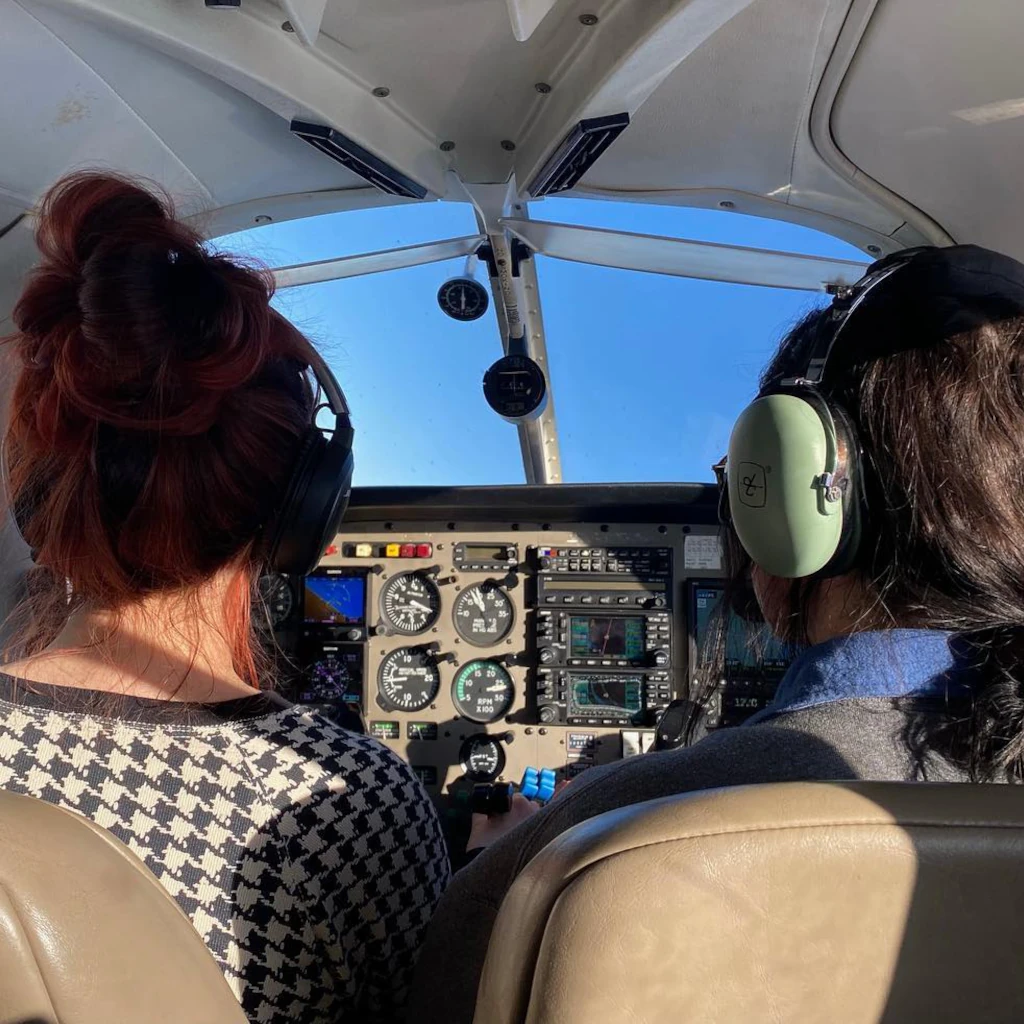
Later in training, weekly slots shift toward solo practice and cross-country planning.
Frequently Asked Questions
How many private pilot lessons should I take per week?
We recommend two to three lessons a week when your schedule and budget allow. One a week works, but you will usually spend more time on review.
Can I train while working full time?
Yes. A plan with two weekday lessons and a weekend backup slot is a good starting point. Our career-changer training plan helps you build around your job.
How much do private pilot lessons cost in St. Louis?
We do not publish rates, because cost depends on how often you fly, your aircraft, and your progress. Call us at (618) 360-7600 or contact our team for current numbers. Financing may be available to qualified applicants.
What should I do between lessons?
Study a chapter, work practice questions, and chair-fly your next lesson. Our guide to making the most of every flight lesson has a full routine.
What happens when weather cancels my lesson?
Move it to your backup slot or use the time in our Redbird simulator, so the week keeps its rhythm. See our simulators page for details.
Where do private pilot lessons take place in the St. Louis area?
We train at St. Louis Downtown Airport in Sauget, and students come from both sides of the river, including Belleville and Kirkwood.
Build your weekly flight plan after a discovery flight
The easiest way to set your pace is to fly once and talk it through with an instructor. A discovery flight at St. Louis Downtown Airport shows you what a lesson feels like, and afterward we can help you sketch the weekly schedule you will actually keep. Request your discovery flight and our team will call to confirm your date.